Expert tips and guidance to help your indoor plants thrive.
Proper watering is crucial for plant health. Most indoor plants prefer soil that's consistently moist but not waterlogged. Check the top inch of soil before watering.
Signs of overwatering include yellowing leaves and root rot. Underwatered plants will have drooping leaves and dry soil.
Use room temperature water and ensure your pots have drainage holes to prevent water accumulation.
Understanding light needs is essential. Bright indirect light means placing plants near a window but not in direct sunlight. Low light plants can thrive in north-facing windows or rooms with artificial lighting.
Rotate your plants regularly to ensure even growth. Watch for signs of too much light like scorched leaves, or too little light like leggy growth.
Most indoor plants prefer temperatures between 65-75°F. Avoid placing plants near heating vents, air conditioners, or drafty windows.
Tropical plants benefit from higher humidity. You can increase humidity by grouping plants together, using a pebble tray, or running a humidifier.
Yellow leaves often indicate overwatering or nutrient deficiency. Brown, crispy edges usually mean low humidity or underwatering. Drooping leaves can signal either too much or too little water.
Pests like spider mites, mealybugs, and aphids can affect indoor plants. Regular inspection and early treatment with natural solutions can prevent infestations.
If your plant isn't growing, it might need more light, nutrients, or a larger pot. Repotting every 1-2 years provides fresh soil and room for growth.
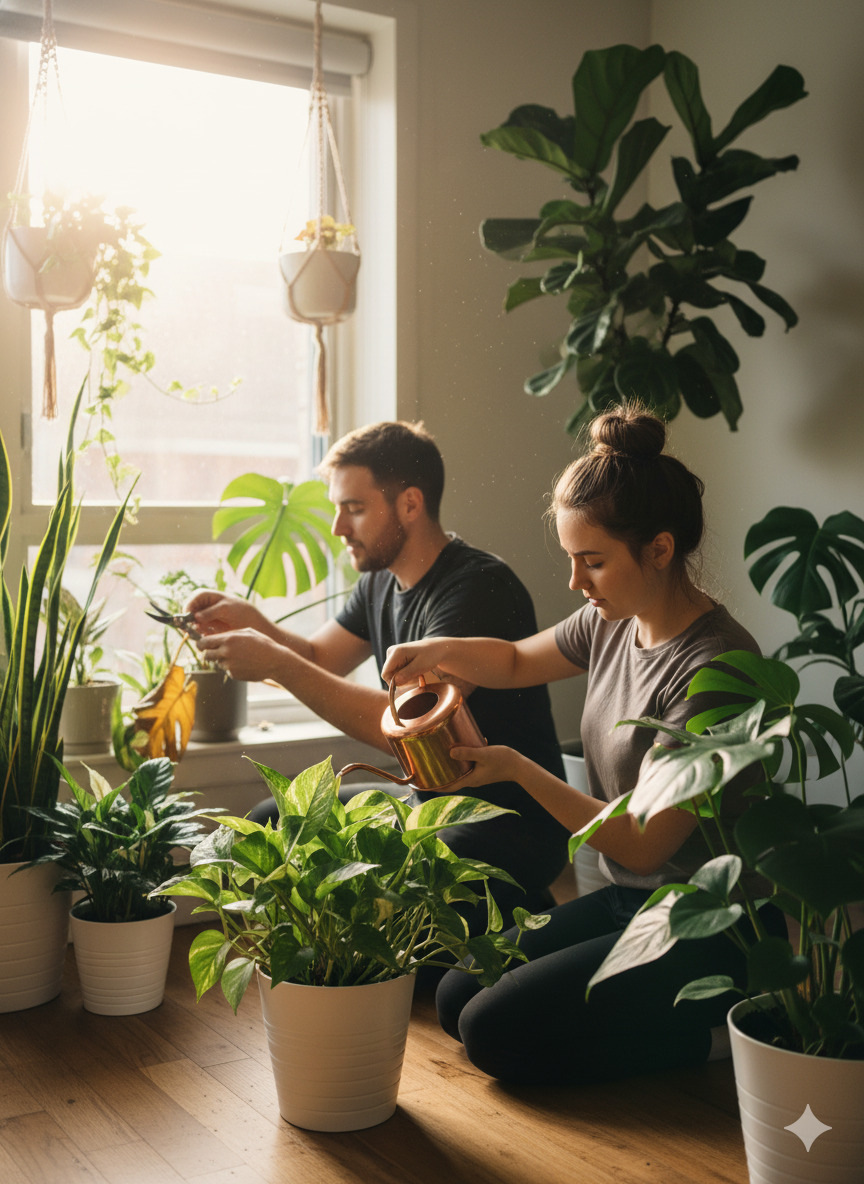
Active growing season. Increase watering frequency and consider fertilizing monthly. Plants may need more frequent watering as they grow.
Dormant period for most plants. Reduce watering and stop fertilizing. Some plants may drop leaves naturally during this time.
Monitor indoor temperatures during extreme weather. Move plants away from cold windows in winter and provide shade in summer.
Have questions about plant care? Our team is here to help you succeed with your indoor garden.
We use cookies to enhance your browsing experience. By continuing to use our site, you consent to our use of cookies.